Painting invoice template in English and Spanish
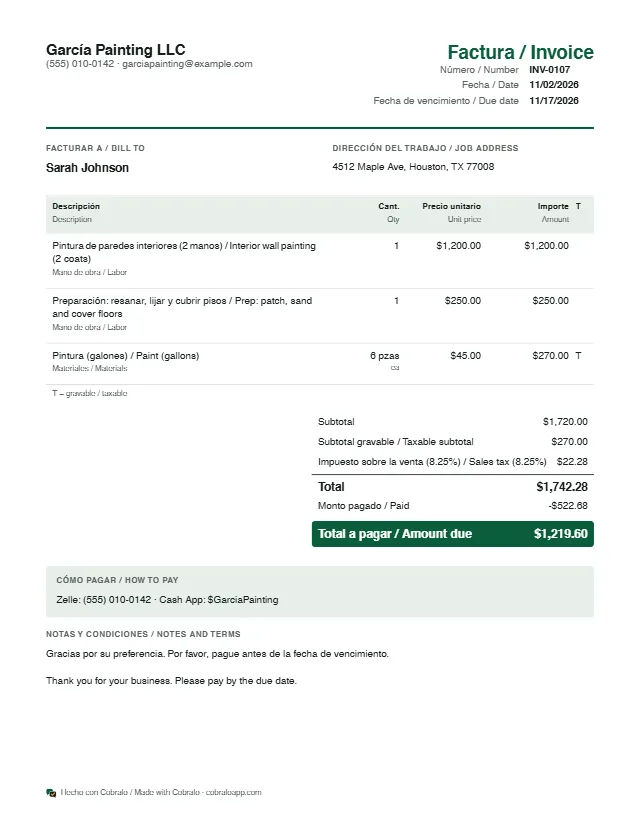
Finish the job, walk through it with your client and send the invoice the same day. It should say what you painted, the deposit they already paid, what's left and how to pay you.
It opens with the sample line items filled in: change them to yours. Free, no sign-up.
Practical tips
- Invoice right after the final walk-through, while the client is happy with the result. Touch-ups found on the walk-through go on a punch list, not on a new price.
- Show the deposit as already paid so the balance is clear. Clients pay faster when the number at the bottom is the one they owe.
- Add each change order (an extra room, a color change, an accent wall) as its own line with the price you agreed on, so nothing on the bill is a surprise.
- Print your Zelle, Cash App or Venmo on the invoice, and a due date. With homeowners, "due on completion" or 15 days is common.
- Write the paint colors, brand and sheen in the notes. When the client calls for touch-ups next year, you'll know what you used.
Cobralo makes templates; it isn't legal or tax advice. These tips are general, and rules vary by state and city.
Frequently asked questions
Should I charge sales tax on a painting invoice?
It depends on your state and the job. In many states paint and supplies are taxable and labor on a home isn't; in others it's all taxable, or none of it. Cobralo lets you mark which lines are taxable. Ask your accountant or your state's revenue department.
Can I send the invoice in Spanish if my client speaks English?
Yes. Choose English, Spanish or both side by side. Many painters send a bilingual invoice so they can read it and so can their client.
What if the client doesn't pay?
Send a friendly reminder with the invoice a few days after the due date, then call. If it's still unpaid, many states let you file a mechanic's lien on the property, but the deadlines are short and vary by state, so learn yours early.
Haven't quoted the job yet? Start with the estimate: Painting estimate.