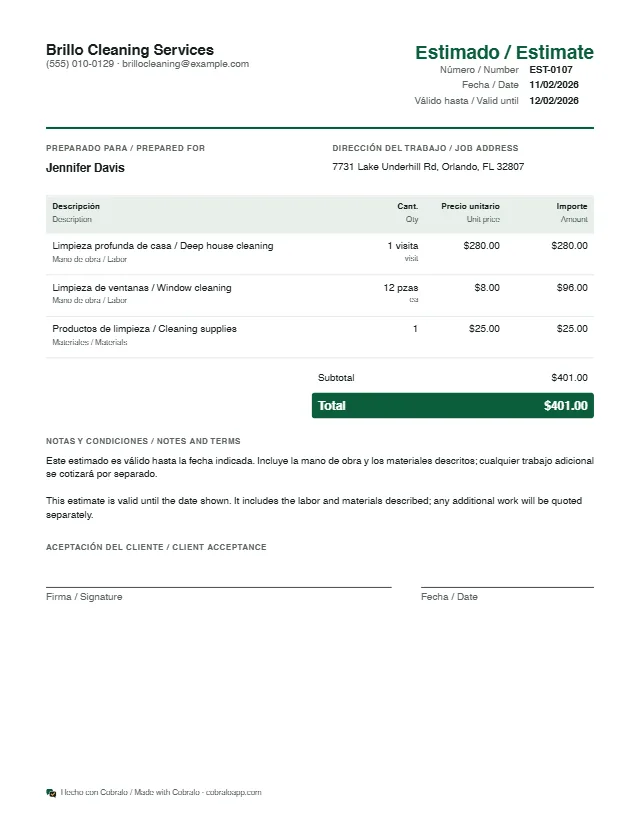
Cleaning estimate template in English and Spanish
A clear cleaning estimate says what gets cleaned, what doesn't, what the first deep clean costs and what each visit costs after that. The client knows what to expect, and you don't end up cleaning the oven for free.
It opens with the sample line items filled in: change them to yours. Free, no sign-up.
Practical tips
- See the house or ask for photos before you give a final price. The number of bedrooms and bathrooms, pets, and how long since the last cleaning change the time more than the square footage does.
- Price the first deep clean separately from regular visits. Say what each includes (inside the oven, the fridge, windows, baseboards) and what doesn't.
- For move-out cleanings, write that the house must be empty with the water and power on. No water or power, no cleaning.
- Write your cancellation policy: for example, a fee for cancellations with less than 24 hours' notice or if no one lets you in.
- Sales tax on cleaning varies a lot by state. In Texas, for example, cleaning homes and businesses is taxable; the exception is a self-employed person working as household help.
Cobralo makes templates; it isn't legal or tax advice. These tips are general, and rules vary by state and city.
Frequently asked questions
How do I price a house cleaning?
Estimate the hours from the size of the house and its condition, multiply by your rate and give the client a flat price per visit. The first deep clean costs more; regular visits take less time.
Should I charge by the hour or a flat rate?
A flat rate is easier for clients and rewards you for working fast. Hourly makes sense for a first visit or jobs you can't see in advance. You can put either on the estimate.
Do I bring my own supplies?
Most cleaning services do, and build the cost into the price. If the client wants specific products, write it on the estimate.
Finished the job? Move on to the invoice: Cleaning invoice.