
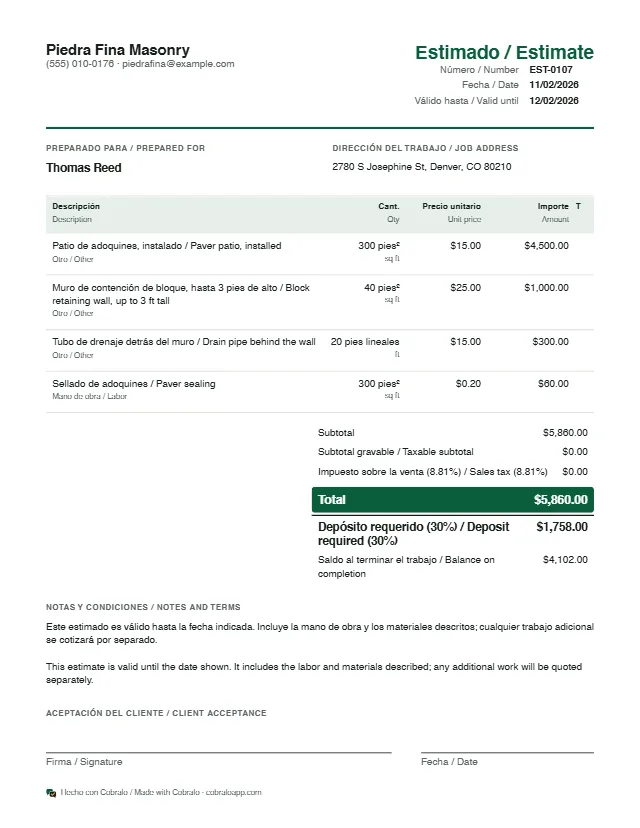
Masonry and paver estimate template in English and Spanish
Paver patios, retaining walls, brick and stone: it's all quoted by the square foot or linear foot, with base and drainage on their own. Cobralo starts you with sample line items and their units: change them to yours and send the PDF in English, Spanish or both.
It opens with the sample line items filled in: change them to yours. Free, no sign-up.
Practical tips
- Call 811 before you dig for a patio or wall. It's free, and they mark gas, power and water lines within a few business days.
- Retaining walls taller than about 3 or 4 feet, or ones holding a load near a house or driveway, usually need an engineer and a permit. Check with your city and put both on their own lines.
- Write down the base you'll put in (gravel, sand, compaction) and the drainage. It's what makes the patio last, and what the client doesn't see at the end.
- In an HOA, the client should get approval before you start. Add a note for rock or big roots you hit while digging: that work is billed separately.
- In Texas, retaining walls and patios count as work on real property, with their own sales tax rules. Other states differ too: list material and labor separately and check yours.
Cobralo makes templates; it isn't legal or tax advice. These tips are general, and rules vary by state and city.
Frequently asked questions
How do you price a paver patio?
By the square foot, by paver type, base and pattern, with excavation, soil haul-away and edging on separate lines when they're significant.
And a retaining wall?
By the square foot of wall face or by the linear foot by height, with drainage, footing and engineering separate. The taller it gets, the more it costs per foot.
How much deposit should I ask for?
Many ask for enough to cover material and equipment rental. Some states cap it on home improvement: in California it's $1,000 or 10% of the contract, whichever is less.
Finished the job? Move on to the invoice: Masonry invoice.